Massage at the Injury Hub
Massage is one of the most effective ways to ease muscle tension, improve circulation and help the body recover from stress or injury. At the Injury Hub, massage is never seen as an isolated service; it is part of our wider approach to musculoskeletal care.
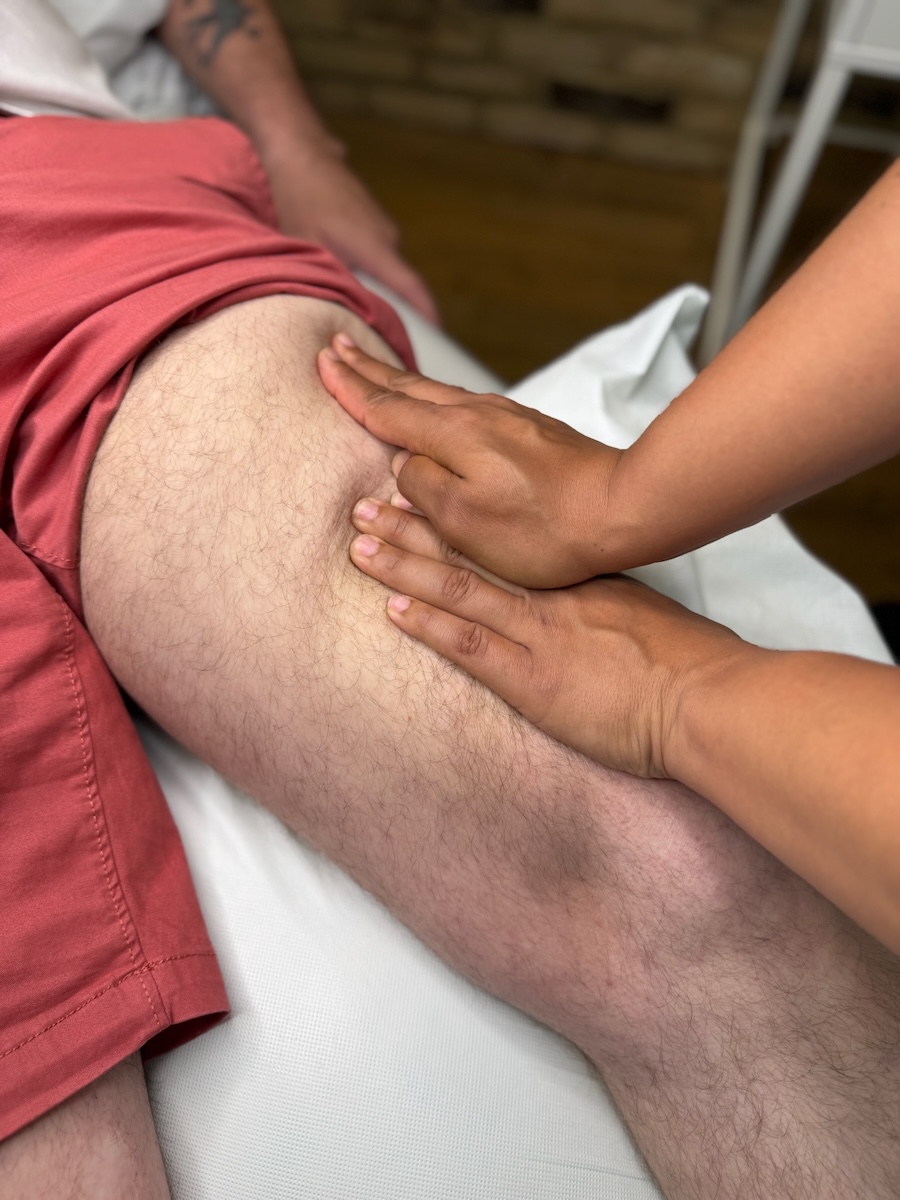
What makes massage at the Injury Hub unique is the collaborative environment in which it is delivered
Our therapists are part of a multidisciplinary team and are involved in case discussions with osteopaths, physiotherapists and doctors. Our musculoskeletal sonographers, who also teach within medical education, contribute imaging expertise and research-led insights that feed directly into treatment planning. This means massage at the Injury Hub is always informed by the latest knowledge in musculoskeletal medicine, and patients can be seamlessly referred for additional care such as diagnostic ultrasound, guided injections, strength & conditioning, osteopathy or physiotherapy if required.
Whether you are an office worker struggling with postural strain, a recreational runner managing tight calves, a professional athlete preparing for competition, or an expectant mother looking for relief, our massage services can be tailored to your specific needs. With Kerry’s developing physiotherapy expertise, Terry’s 20 years of experience, and the support of our integrated clinical team, massage at the Injury Hub offers more than temporary relief, it provides a pathway to lasting recovery, improved performance and better long-term health. Learn more about our different types of massage below.
Pregnancy Massage
Offered by Kerry, provides safe and effective relief from the physical changes of pregnancy. It can ease backache, reduce swelling, relieve muscular tightness and promote relaxation, helping expectant mothers to feel more comfortable and supported throughout this important time.
Sports Massage
takes a more focused approach, aimed at improving performance and recovery. It can be used pre-activity to prepare the muscles, increase flexibility and reduce the risk of injury, or post-activity to reduce stiffness, improve blood flow and accelerate recovery. Many of our patients use sports massage to stay injury-free, whether they are training for a marathon, playing golf, cycling, or keeping active with regular gym sessions. Even those exercising recreationally often find sports massage helps keep their muscles healthy and resilient.
Buccal Massage
This specialist treatment is performed exclusively by Adele DuCasse, one of our highly skilled osteopaths at The Injury Hub. Adele has advanced training in intra oral and facial manual therapy and integrates this expertise seamlessly into our evidence informed approach to musculoskeletal care.
Buccal Massage is a specialised form of intra oral and external facial therapy that targets deeper facial, jaw and neck musculature in order to restore muscular balance, optimise lymphatic flow and support overall facial biomechanics. In keeping with the Injury Hub’s multi modal and evidence informed ethos, this treatment focuses on the relationship between facial muscular tension, jaw mechanics, cervical alignment and the autonomic nervous system. Read and learn more about Buccal Massage.
Remedial Massage
is ideal for easing everyday aches and pains, particularly those linked to posture, repetitive strain, or occupational stress. Patients who spend long hours at a desk, commuting, or in physically demanding jobs often benefit from the release of tightness in the back, neck and shoulders. It can also help with tension headaches, stiffness and the muscular fatigue that builds up over time.
Our therapists, Kerry and Terry, are both highly skilled in remedial and sports massage and work closely with the rest of our clinical team including osteopaths, physiotherapists, doctors and sonographers, to make sure every treatment session is integrated into your overall plan of care. Kerry also offers pregnancy massage, providing safe, tailored support for expectant mothers.
Kerry brings an extra dimension to her treatments as she is currently in the final year of her physiotherapy training. This gives her a unique perspective, combining her growing expertise in injury rehabilitation and movement with her hands-on massage skills. Terry, by contrast, offers the reassurance of over 20 years’ experience as a massage therapist. His extensive knowledge means he can quickly recognise patterns of muscular tension, adapt his approach and deliver highly effective treatments for each individual. Together, Kerry and Terry provide a blend of fresh physiotherapy insight and long-standing massage expertise.
Sports & Remedial
- 30 minutes
Sports & Remedial
- 60 minutes
Buccal Massage
- Initial Consultation - £80
- Follow up treatment - £60
Buccal Massage
The deeper facial muscles such as the masseter, buccinator, medial and lateral pterygoids and the perioral structures can hold significant tension and may contribute to symptoms such as jaw discomfort, headaches, facial fatigue, clenching patterns and altered breathing mechanics. Research over the last decade has highlighted the strong connection between facial and cervical muscle tone, stress physiology and temporomandibular joint function (Silveira et al. 2020; de Felício et al. 2018).
Buccal Massage involves gentle intra oral techniques performed with sterile gloves to access the muscles that cannot be reached through external massage alone. It is combined with external myofascial release and lymphatic mobilisation that aim to reduce local congestion, improve tissue hydration and enhance microcirculation. Studies have shown that targeted myofascial release can improve neuromuscular coordination, reduce nociceptive input and help normalise resting muscle tone in patients with jaw and facial tension (Macedo et al. 2022). This approach also aligns with emerging evidence describing the influence of facial manual therapy on autonomic regulation and perceived wellbeing (Kim and Lee 2021).
Many patients describe a noticeable reduction in jaw tension, an improved sense of facial lightness and increased ease with speaking, chewing and general movement. From a clinical perspective, the treatment can support the rehabilitation of temporomandibular joint dysfunction, contribute to reductions in parafunctional activity such as clenching or grinding and promote improved lymphatic drainage within the mid face. Recent work suggests that enhanced facial lymphatic flow may play a role in reducing inflammatory mediators and supporting tissue recovery following overload or strain (Shoshani et al. 2023).
At The Injury Hub, Buccal Massage is incorporated into a broader assessment framework that considers cervical spine mechanics, posture, breathing patterns and psychosocial contributors to muscle tension. This ensures that treatment is not only therapeutic but also part of a comprehensive and patient centred management plan.
Safety and Clinical Standards
As with all manual therapies performed at The Injury Hub, Buccal Massage is delivered with meticulous attention to hygiene and patient comfort. Intra oral work is carried out with sterile gloves and a gentle approach tailored to the patient’s tolerance. Patients with recent dental surgery, active oral infections or acute temporomandibular joint inflammation may require alternative pathways, which will be explored during the consultation.
Conclusion
Buccal Massage can be a highly effective option for patients experiencing jaw tension, facial muscular overload, temporomandibular related discomfort or general facial tightness associated with stress and postural strain. When delivered by our osteopath Adele Ducasse as part of a wider Injury Hub management plan, it can contribute meaningfully to improved facial function, reduced discomfort and an enhanced sense of wellbeing.
References (Harvard Style, 2018–2024)
de Felício, C.M., da Silva, M.A.M.R. and de Oliveira Melchior, M. (2018) Muscle activity and jaw resting posture in patients with and without temporomandibular disorders. Journal of Oral Rehabilitation, 45(7), pp. 497–507.
Kim, H. and Lee, J. (2021) Effects of facial manual therapy on autonomic nervous system responses and perceived relaxation. Clinical Anatomy, 34(8), pp. 1140–1147.
Macedo, L., Sousa, S. and Bevilaqua-Grossi, D. (2022) Myofascial release and neuromuscular adaptations in temporomandibular dysfunction. Musculoskeletal Science and Practice, 59, p. 102541.
Shoshani, Y., Arbel, R. and Niv, Y. (2023) Lymphatic drainage therapy and its role in reducing inflammatory markers in facial soft tissue. Manual Therapy and Rehabilitation, 12(4), pp. 210–218.
Silveira, A., Gadotti, I. and Biasotto-Gonzalez, D. (2020) Relationship between masticatory muscles, cervical posture and craniofacial pain. Pain Research and Management, 2020, pp. 1–9.